A definite step away from the classic COLORS editions. I’m intrigued with the larger size, extra pages and the new innard rulings. Also, Summer 2014 comes in a two-pack rather than the classic three-pack.
I can’t wait to get my hands on these. I’m curious to see if students can use these as a go-to notetaking book for class. Normal Field Notes books are just too small for heavy notetaking.
Subscribe to The Newsprint
Enjoy these posts? Subscribe to get more, delivered right to your inbox.
The Midori Traveler's Notebook is a fairly well known system whereby multiple notebooks and inserts can be carried in a leather cover. From what I've heard, Midori leather and Midori paper are things to yearn for.
However, Midori Traveler's Notebooks come in awkward sizes. The regular Midori notebook is inconvenient for ultra portability as the cover is fairly large. And the passport Midori is smaller than the average 3 ½" x 5 ½" memo book. What do we Field Notes devotees use?
Ray Blake's Raydori of course.
The Raydori is exactly that: Ray's Midori. Ray’s soft, supple leather is cut for a Field Notes book and the Raydori provides most of the Midori’s widespread benefits.1 To top it off, the Raydori costs a mere £18, shipping in.
In the long run though, every Midori-styled notebook comes with a prerequisite: You have to want a Midori. The same holds true for the Raydori. If you have no use for a multiple book system or for extra inserts, the Raydori may not be for you.
Raydori
Ray Blake is a well-known blogger and writes at My Life All in One Place. His blog is an incredible archive of useful inserts for Midori-styled books and other stationery systems. If you lust over writing guides for your stationery, you better head over and take a peek.
Ray made himself a Field Notes sized Midori and his self-made cover became widely popular after he made it available for the public. Eventually, Ray published a blog post outlining how anyone could get their hands on his cheap and simple Midori iteration. After a quick email and an £18 Paypal transfer, Ray cut, strung and shipped my Raydori. It arrived about three weeks later and I've been testing it ever since.
The Raydori was packaged in an elegant wrapping paper and had an attached note handwritten by Ray himself. I love this touch of personality. The raw format of the transaction — that of emailing and initiating a Paypal transfer — and the handwritten note make the Raydori one of the most unique products I've ever unboxed. I actually felt like Ray was making this product for me. Because, I guess, he actually did make it specifically for me.2
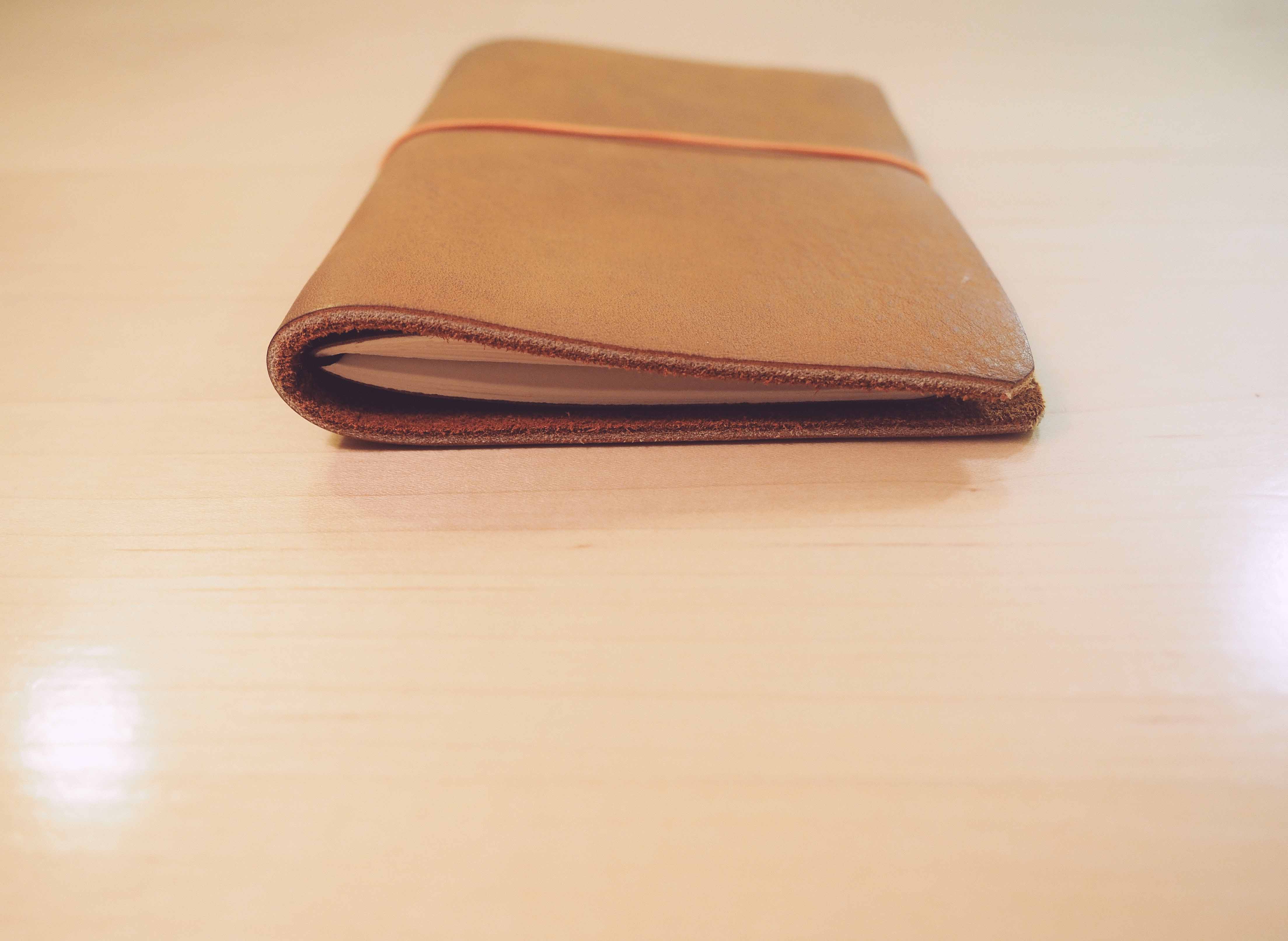
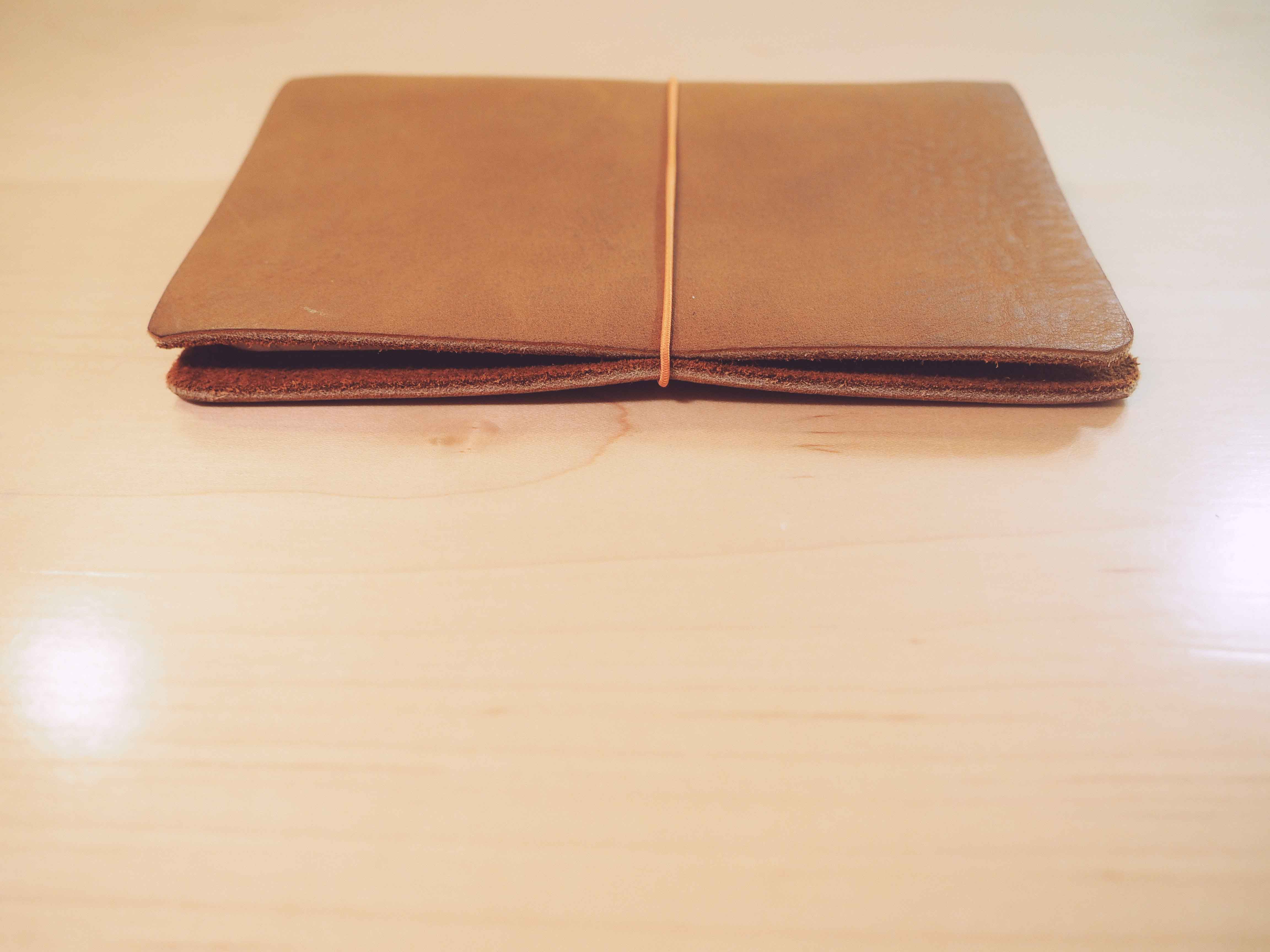
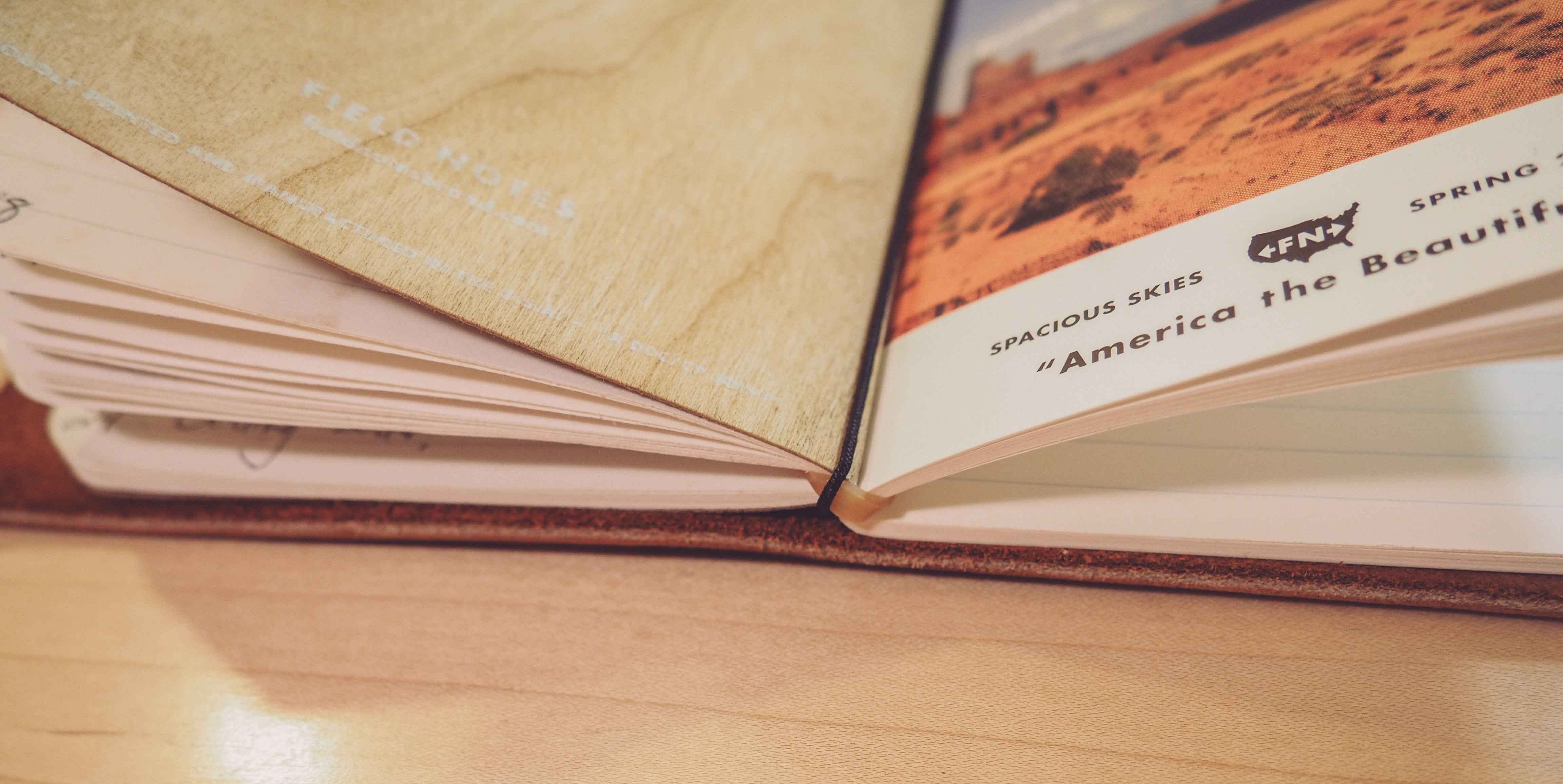
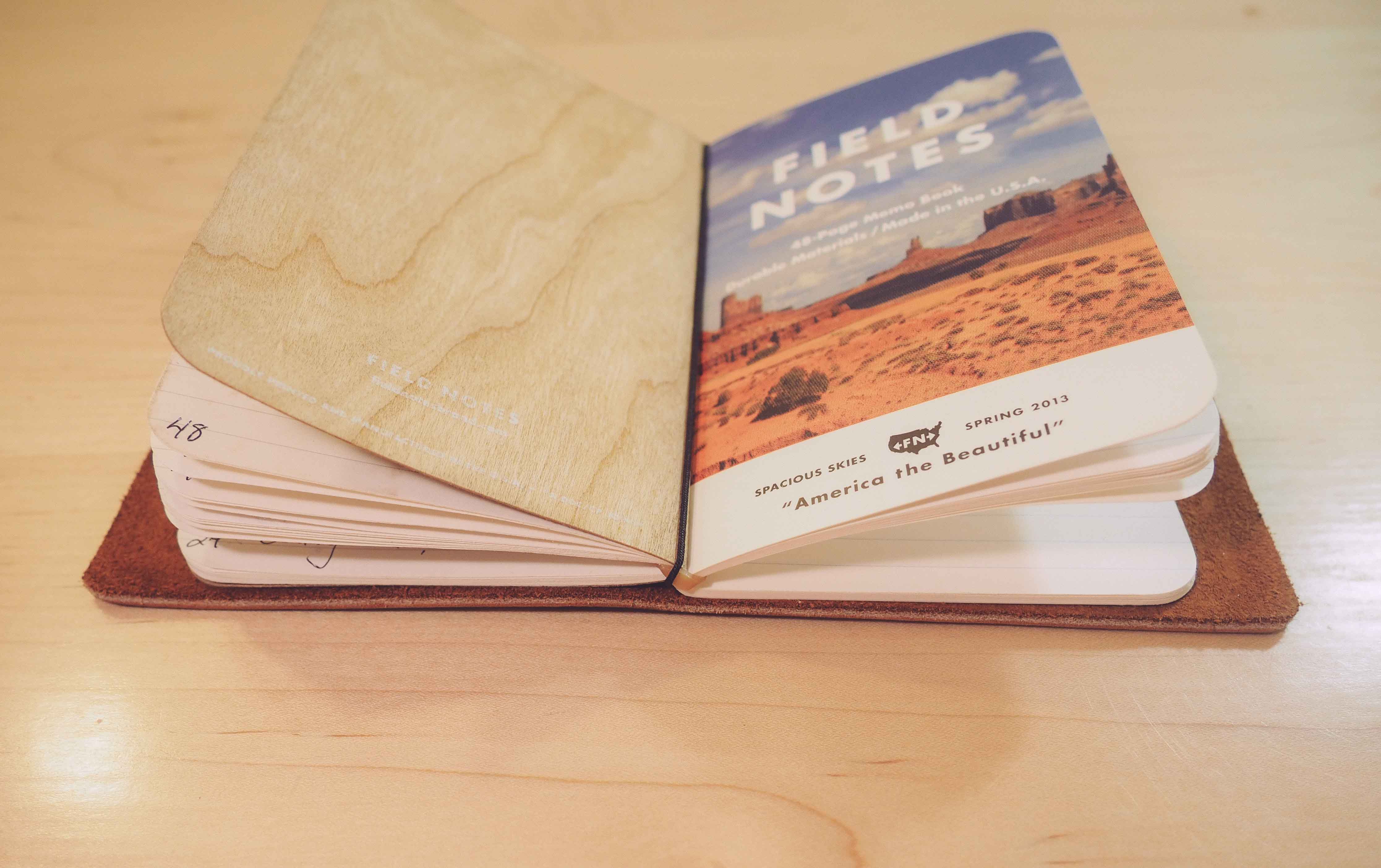
The Raydori is about a quarter inch taller and wider than a standard Field Notes book and the leather is about an 1/8" thick. The leather is extremely soft and pre-broken. Moreover, the inside of the cover is fuzzier and softer than my Hellbrand Leatherworks cover. I really like the soft feel of the cover, but I worry about the long-term durability of the case. At £18, the Raydori is cheap enough to replace and I foresee heavy users eating their way through multiple covers over time.
The Raydori's elastics are small and limit the size of the cover. However, I sometimes worry that I'm going to rip the elastics when strapping in two or more books. To maintain the security of the cover, those elastics need to be strung fairly tight and I can’t help but worry when attaching an extra book. Once those elastics have ripped, the cover is useless until fixed.
I wouldn't have chosen the orange outside elastic if it had been my direct choice, but I think the orange colour works nicely with the camel brown. This outside elastic is extremely handy; books and other odds-n-ends can actually be secured inside the cover. My Hellbrand cover has a nice pouch for odds and ends, but the outside elastic on the Raydori adds an extra level of security.
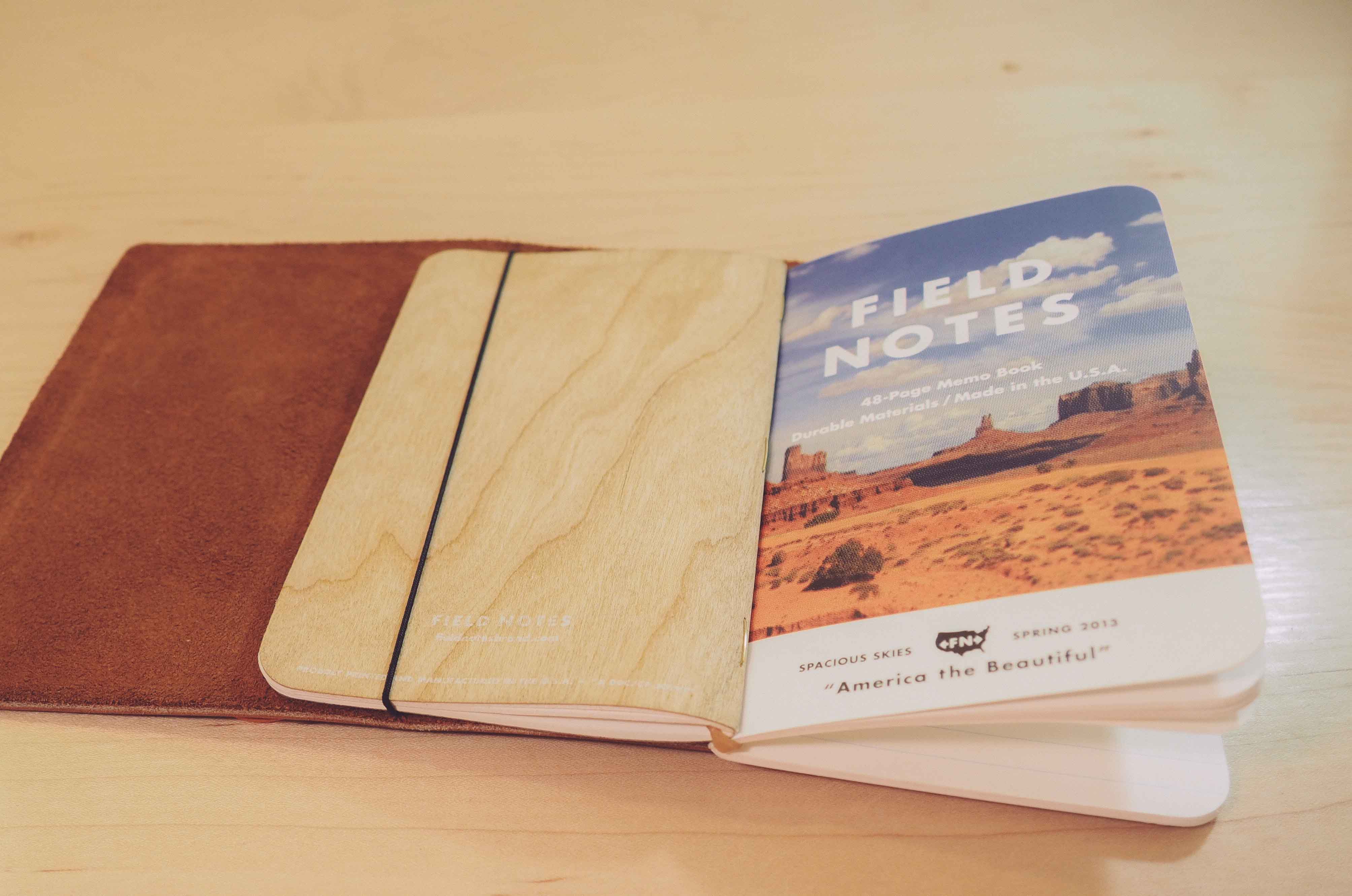
Speaking of that Hellbrand pouch, I love how the Raydori doesn't have a pouch. I often find the Hellbrand pouch to impede writing, especially when I'm starting or finishing a book. The pouch line is felt when writing near the middle of the page and when writing on pages near the beginning or end of a book. The Raydori, on the other hand, has no impediments — a simple piece of leather strung with elastic can't possibly get in the way of writing. This is perhaps the reason why I see the Raydori fitting into my bag from time to time. If not for the perfect simplicity, I would probably jettison the Raydori and use the Hellbrand cover exclusively.
Overall though, a few things strike a negative chord for me. I believe Mr. Blake could alleviate at least one of these problems with a small increase in price and an extra service.
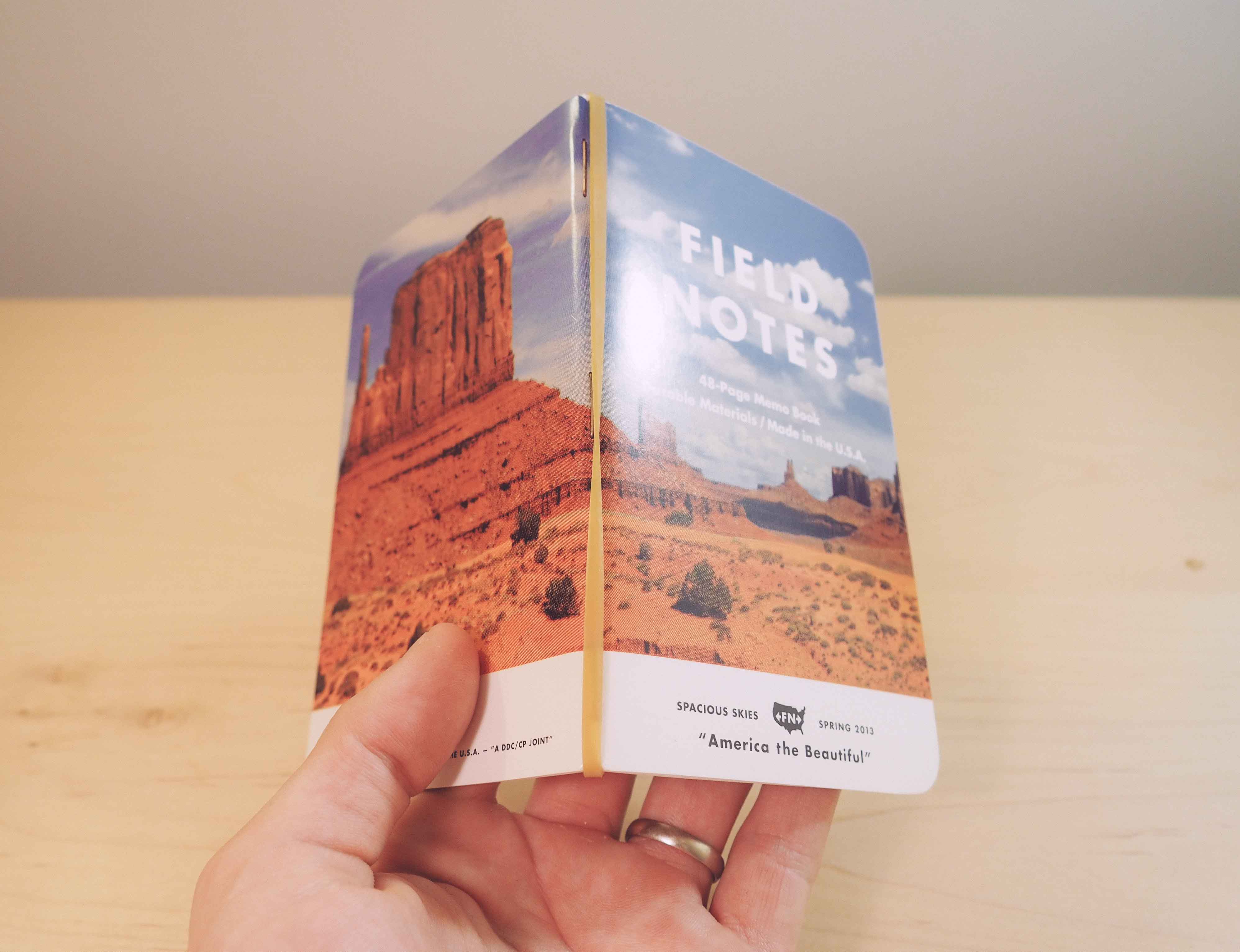
The Midori system requires elastics to secure multiple books together before securing the books to the cover. A first elastic is used to split the memo books down the middle and the tied books are slid into the Raydori's elastics. Although slightly confusing to implement the first time, once understood, the Midori stringing system is ingenious.
Disappointingly however, the elastic used to tie two books together is not included in Ray Blake's package. I had to run to Walmart and buy an actual rubber band to tie my books together. The rubber band I grabbed is thick and obtrusive, making writing near the middle of the book awkward and bumpy. Further, because actual Midori's are not Field Notes sized, there are no first-party elastics to secure two books to one another. This frustration could be easily fixed by an extra £2 charge for extra elastics. In hindsight, I'd happily pay for these.
Secondly, writing in a stack of books is uncomfortable. The “drop-off” when writing on the right hand page (assuming you're writing in the top-most book) forces you to write in an uncommon position. This is a direct consequence of the Midori system itself and I can only imagine the experience would be ten times worse with an actual Midori.
Thirdly, the Raydori makes little to no sense if your workflow only demands the use of one book. The Raydori seems to be made to carry two or more books. The elastics stretch to a length for a thicker package and the case expands to a natural depth when two books have been attached. If you don't find yourself needing a second or third notebook, I don't think the Raydori will fit your in your utility belt.
Verdict
This all sounds complicated and I need to get to the point: At the end of the day, the Midori system majorly inhibits the Raydori. The Midori system's value is found in accumulating and transporting all sorts of objects in your bag. But actually writing in a Midori sucks — it seems to me that the Midori was never meant to write in and instead was created to mimic a scrapbook. I don't mind scrapbooks, but I want a simple cover to carry around a book or two in my back pocket. And the Midori — Raydori included — isn't meant for my back pocket.
If you do find yourself wanting to throw a couple Field Notes books in your bag, then the Raydori is one of the best covers you can get. The Raydori is thin, light and extremely soft to the touch. It handles two Field Notes books really well and doesn't get too thick in the process. Adding a third book to the mix does make things a bit bulgy, but it could pass if you don't have any other option. At a miniscule £18, you won't find a cheaper option for carrying multiple Field Notes books.
However, if you're looking for a comfortable writing experience or for a higher-quality leather cover, I recommend checking out the Hellbrand Leatherworks cover instead. Both are great cases and I use both at different times. In the end though, I find myself coming back to my Hellbrand more often than my Raydori. Your mileage may vary.
“Most” because there are no official inserts for a Field Notes sized Midori. You're left with using only Field Notes books or with creating your own custom inserts. There has to be a market at this point for aftermarket Field Notes sized inserts. You heard it here first. ↩
Ray can also emboss a small phrase or name on the front cover. I opted out of the embossing, but it’s a nice add-on that doesn’t cost an extra dime. ↩
When I bought the E-M10 I mostly did so because it had the viewfinder and the manual control dials. The built-in Wi-Fi seemed like a novelty feature to me, but over the past 5 months I’ve found that I use the Wi-Fi very often.
If I could sum up my first impressions in two sentences, this is what I’d say. However, I can’t sum it up entirely in so few characters, so look for my first impressions shortly.